The Enigmatic Charm of the Russian Blue Cat: A Deep Dive into a Beloved Breed
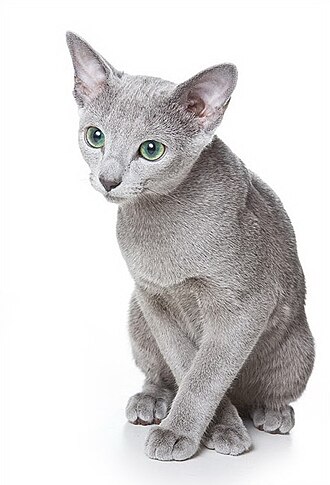
The Russian Blue cat, a breed steeped in history and characterized by its unmistakable elegance, has captivated cat enthusiasts for centuries. Known officially as the Русская голубая кошка (Russkaya golubaya koshka), this pedigreed feline stands apart with its defining solid blue coat, a hallmark feature that has endured for well over a hundred years. Accepted for registry and holding championship status with all major international cat organizations, the Russian Blue is not just a pretty face; it’s a short-haired marvel, celebrated for its dense, plush double coat of a pale blue-grey hue, adorned with a distinct silver sheen, and those mesmerizing bright emerald green to yellow-green eyes that pierce through its stoic demeanor.
These regal felines are more than just a beautiful spectacle; they embody a unique blend of intelligence, affection, and a playful spirit that makes them cherished companions. For those exploring the intricacies of this breed, understanding its origins and evolution provides a richer appreciation of its distinct characteristics and enduring appeal. If you're looking for an introductory overview, you might find
Russian Blue Cat - Article 1 a helpful starting point.
A Glimpse into the Russian Blue's Distinguished History
The journey of the Russian Blue cat is as intriguing as its appearance. This breed is selectively developed from what was originally a naturally occurring landrace, believed to have its roots in the harsh, northern port city of Arkhangelsk, Russia. This geographical tie is so strong that they are often affectionately referred to as "Archangel Blues." The romantic notion persists that these striking cats first made their way from the Archangel Isles to Great Britain and other parts of Northern Europe in the 1860s, traveling aboard the ships of sailors who were undoubtedly enchanted by their beauty.
The first documented mention of an "Archangel Cat" in British print dates back to 1862, sparking early interest in the breed. Its formal introduction to the public stage came in 1872 at a cat show held in The Crystal Palace in England, where it competed under the name Archangel Cat. However, historical accounts from figures like Harrison Weir, writing in 1895, suggest that early show cats bearing the Russian Blue name were sometimes British-bred grey tabbies. He noted that separate grey cats, arriving from Archangel in the 1800s, possessed features more consistent with the modern Russian Blue breed. For many years, the Russian Blue found itself competing in a broad class alongside all other blue-coated cats. It wasn't until 1912 that its distinctiveness was fully recognized, granting it its very own breed class – a testament to its unique qualities. The breed’s development was largely concentrated in the UK and Scandinavia throughout the early 20th century, up until the devastating impact of World War II.
The Defining Characteristics of the Russian Blue Cat
What truly sets the Russian Blue apart is its remarkable physical appearance, a masterpiece of feline genetics and selective breeding. Each feature contributes to an overall impression of understated elegance and quiet dignity.
The Iconic Blue Coat
The most celebrated trait of the Russian Blue is, without doubt, its coat. It is a solid blue, which is actually a dilute black, but the magic lies in its texture and sheen. The fur is short-haired yet dense and luxuriously plush, forming a double coat that feels incredibly soft to the touch. This unique double coat means the guard hairs are the same length as the undercoat, giving the fur a characteristic springiness that holds its shape. The color itself is a pale blue-grey, but what elevates it is the distinct silver tipping on each hair. This silvering causes the coat to shimmer and catch the light, creating an almost iridescent quality that makes the Russian Blue appear to glow, especially in motion. This natural luster is a key identifier and a source of constant admiration.
Mesmerizing Green Eyes
Complementing their stunning blue coat are the Russian Blue’s captivating eyes. Kittens typically start with yellow eyes, which gradually transition to a vibrant green as they mature. The adult Russian Blue boasts bright emerald green to yellow-green eyes that provide a striking contrast against their cool blue fur. These large, expressive eyes are often described as having an intelligent, alert, and almost wistful gaze, further enhancing the breed's allure.
A Graceful Physique
Beyond its coat and eyes, the Russian Blue possesses a finely tuned, athletic build. They are medium-sized cats, characterized by a lean and muscular body that is both elegant and powerful. Their heads are wedge-shaped, often described as having a "cobra" or "straight line" profile when viewed from the side, with prominent whisker pads that give them a distinctive smile. Their ears are relatively large and wide at the base, set high on the head. Long, slender legs terminate in dainty, oval paws, and they possess a gracefully tapering tail. This combination of features creates an overall impression of refined beauty and agility.
Post-War Revival and Modern Development
The turbulent period of World War II had a significant impact on many cat breeds, and the Russian Blue was no exception. A drastic reduction in their numbers post-war threatened the breed's continuity. To address this crisis and rebuild populations, breeders in Europe and Scandinavia resorted to limited crossbreeding, notably with the Siamese cat. While this helped to bolster numbers, it also introduced certain Siamese traits into the Russian Blue lineage, such as a slightly lighter build or green eyes that were not quite as deep an emerald.
Across the Atlantic, Russian Blues had made their way to the United States even before the war. However, it was in the post-war era that American breeders truly came into their own, playing a pivotal role in shaping the modern Russian Blue we see today. These dedicated breeders painstakingly combined the bloodlines of both the Scandinavian and British Russian Blues, working diligently to refine the breed and systematically breed out the less desirable Siamese traits. Their efforts ensured the Russian Blue maintained its distinctive appearance and temperament, solidifying its place in the modern cat fancy. The resilience and dedication of these breeders highlight the commitment required to preserve the unique heritage of a purebred cat.
Beyond the Pedigree: The Russian Blue's Influence on Other Breeds
The Russian Blue's strong genetic makeup and desirable traits have not been confined to its own breed development. On a limited basis, these cats have been strategically used to create entirely new breeds or to enhance existing ones. A prime example is their contribution to the development of the Havana Brown, a distinct breed known for its rich, chocolate-colored coat. They have also played a role in altering or improving existing breeds, such as the Nebelung, which is essentially a long-haired version of the Russian Blue, inheriting many of its characteristic traits, including the stunning blue coat and green eyes.
More recently, in Italy, Russian Blues are being utilized in a specific breeding program within FIFe (Fédération Internationale Féline) known as RUS4OSH. The purpose of this initiative is to introduce genetic diversity and robustness into Oriental Shorthairs, aiming to make them healthier and more resilient. This innovative use of the Russian Blue's strong lineage underscores its value beyond its individual beauty, highlighting its genetic contributions to the broader feline world. These applications demonstrate the Russian Blue's inherent health and vitality, making it a valuable asset in responsible breeding programs. For a deeper dive into the health and temperament of the breed, you might find
Russian Blue Cat - Article 3 insightful.
Living with a Russian Blue: Personality and Care Tips
Beyond their striking looks, Russian Blues are beloved for their captivating personalities. They are often described as quiet, gentle, and highly intelligent cats, known for forming strong bonds with their human companions. While they can be shy or reserved around strangers, they are deeply affectionate and loyal with their chosen family, often following them from room to room. Their playful nature endures well into adulthood, and they enjoy interactive games, puzzle toys, and fetching. They possess a soft, melodious voice, often described as a quiet purr or meow, rather than loud demands. This makes them ideal companions for those who appreciate a peaceful home environment.
Practical Care Tips for Your Russian Blue Cat:
- Grooming: Despite their dense double coat, Russian Blues are surprisingly low-maintenance in terms of grooming. They are meticulous self-groomers. A weekly brushing is usually sufficient to remove loose hairs and keep their coat healthy and shiny, helping to reduce shedding.
- Diet: Like all cats, Russian Blues thrive on a high-quality diet appropriate for their age and activity level. Consult with your veterinarian to choose the best food, focusing on formulations rich in animal protein.
- Health: Generally, Russian Blues are a robust and healthy breed with a good lifespan. However, like all purebreds, they can be predisposed to certain conditions, though none are significantly more prevalent than in other breeds. Regular veterinary check-ups are crucial for preventative care.
- Mental Stimulation: Their intelligence means they need mental engagement to prevent boredom. Provide a variety of toys, scratching posts, and opportunities for interactive play. They also enjoy high vantage points for surveying their surroundings.
- Socialization: While they might be reserved, early positive socialization with various people and experiences can help them be more comfortable in different situations, though they will always retain a dignified air.
- Space: Russian Blues adapt well to apartment living as long as they receive sufficient attention and enrichment. They value routine and a calm environment.
In summary, the Russian Blue is more than just a beautiful cat; it's a living piece of history, a testament to dedicated breeding, and a wonderful companion. Its serene beauty, coupled with its intelligent and affectionate nature, makes it a truly special breed that continues to charm hearts worldwide. Whether you’re drawn to its legendary origins, its distinctive silver-tipped coat, or its captivating green eyes, the Russian Blue cat offers a unique and rewarding experience for any feline enthusiast.